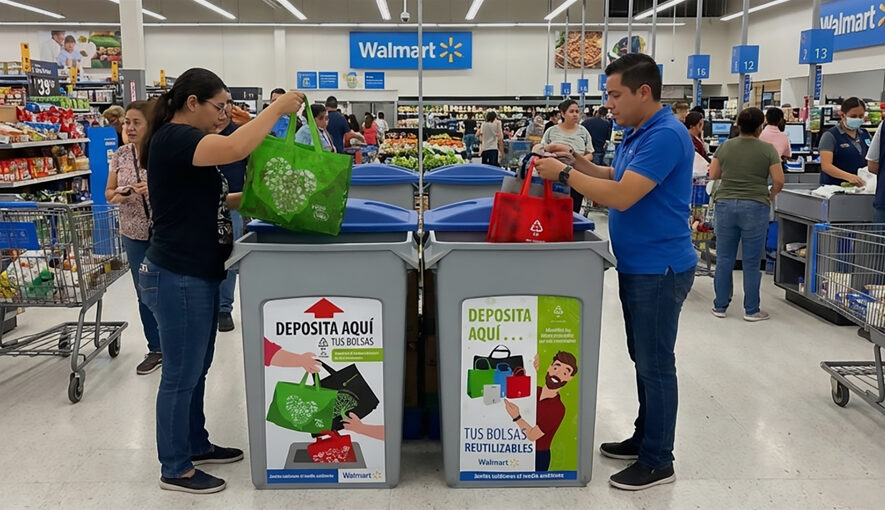
Did you know your reusable bag can have a second life?
Sustainability
Sustainability in plastics is one of today’s most critical environmental challenges, and addressing it requires a comprehensive approach that goes far beyond simple recycling.
At the end of its useful life, your bag can become something new. Plastic containers can be returned. recycle your bags!
It’s a great reminder. Here are some key points:
Do not throw them in regular trash:
If your reusable bag is broken, very dirty, or no longer usable, it should not go into regular waste.
Take them to designated recycling points: Most reusable bags are made from plastics such as #4 LDPE or #5 PP. These materials should not be placed in household recycling bins (the ones used for bottles and containers), as they can get tangled in recycling machinery.
Where to recycle them? Large supermarkets usually have dedicated bins for plastic bags, plastic film, and wrapping materials. That’s where they should be deposited.
The process: Once collected, the materials are cleaned, melted, and transformed into small plastic pellets. This recycled material is then used to manufacture new products such as:

NEW BAGS

PLASTIC CONTAINERS
AND PACKAGING

URBAN FURNITURE
(benches, bollards)

PLASTIC LUMBER
Your reusable bags are not waste they are a resource. Since they are made from polypropylene (PP), they can be recycled multiple times. Give them a new life!
Ready to be part of the change?
Share this information with your community and take action. Together, we can ensure every bag has a long and useful life.
Conclusion: Reusing a bag as many times as possible is the best option for the environment, and when it can no longer be used, recycling it properly is the best way to give it a second life and close the loop.
Thank you for helping spread this important message! ♻